MY MOM THE ANARCHIST
Format: Hybrid fiction/documentary animated feature (100 minutes)
Director: Julie-Yara Atz
Production: Imajack Films (Switzerland)
Status: Screenplay development running in parallel with footage shot in Syria in 2025
Distinction: Honorable mention at the Raindance 2025 Pitching Competition
Confirmed support: Storylab Pour-cent Culturel Migros
The origin of the project
I began this project the way the ASSad regime fell: overnight, without warning, surprisingly smoothly after 54 years of dictatorship in Syria. I convinced my mom, who had organised most of the demonstrations in Switzerland, to go together, for the first time in fifteen years. I grabbed my camera, and together we went on the surreal trip we never thought we would take in her lifetime: the return to post-war Syria. I called the project, “my Mom the Anarchist”.
The film I’m writing is a hybrid documentary-animation feature film, built around this moment of fracture: when the past is no more, and the future isn’t yet. When everything is possible, and there is space for dreams. The moment when hearts could hold all the hopeful joy and the immeasurable grief of all that was lost.
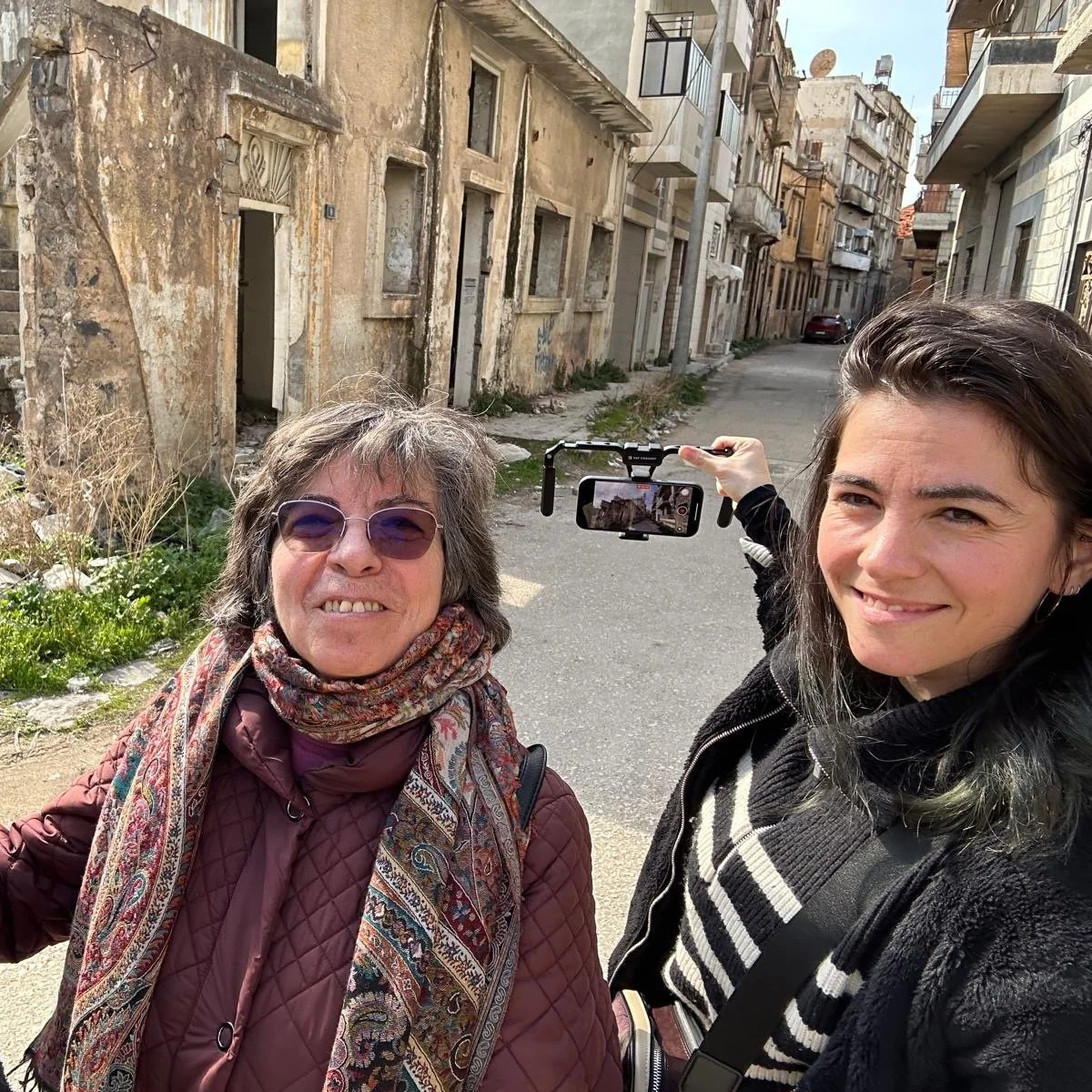
My mother and I in Homs in 2025
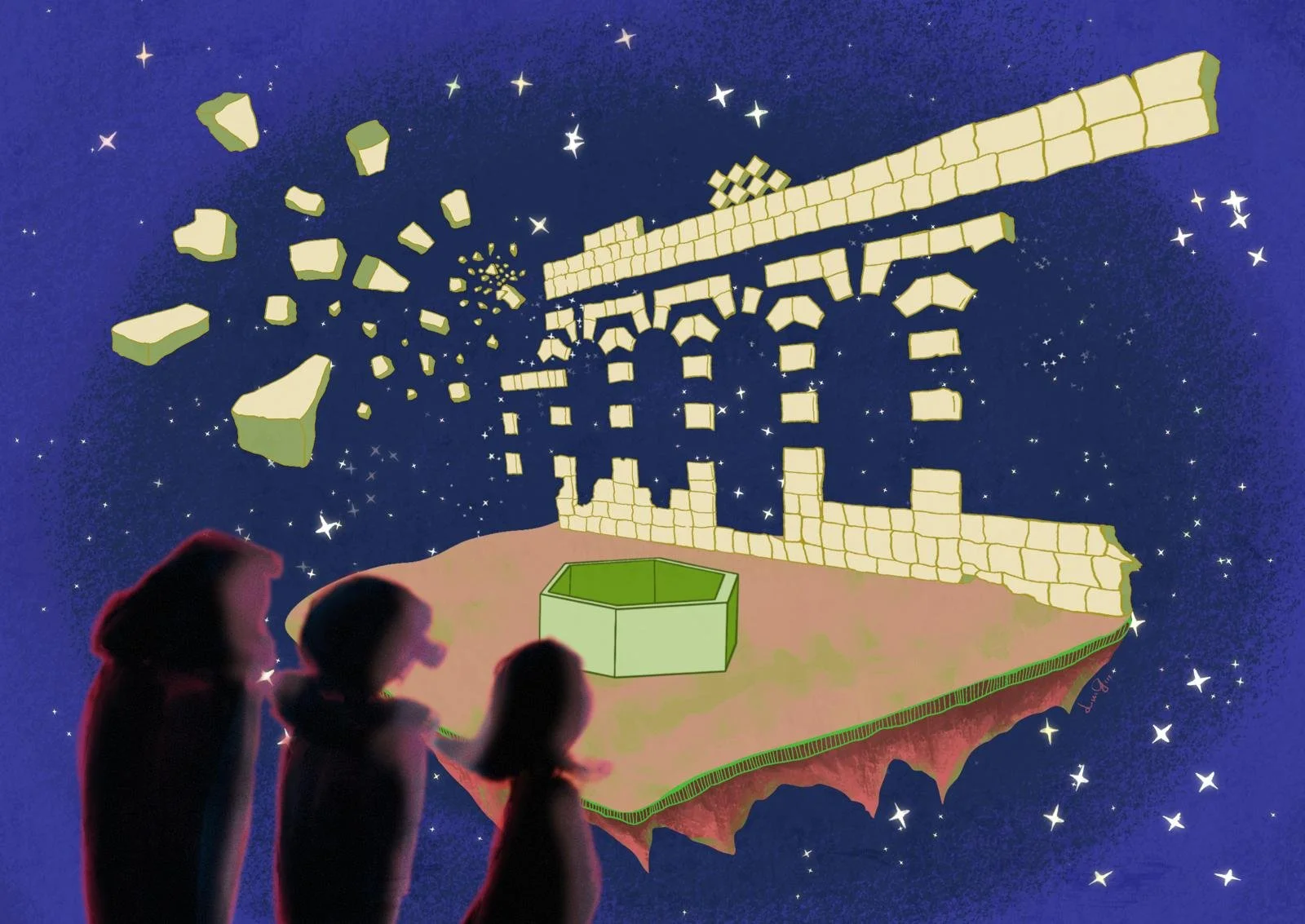
Visual exploration by Lama Ghanem. The animation style is currently in development.
The Narrative Approach
We follow three generations of women. My grandmother Khitam, who already lived through another liberation, from the French Mandate. My mother, Wajd, the anarchist, who spent fifteen years organising protests in front of the UN in Geneva. And me: a mixed race cultural anomaly, Syrian-Swiss in a country that won’t legally recognise that I exist, as women still can’t give the Syrian nationality to their children.
Homs, where we are from, was 80% destroyed during the war, including my great grand-parents’ house that you saw in the video, that was used as a field hospital. There, tongues loosen, separated bodies are reunited. One heart can barely hold the joy along with the immeasurable grief of all that was lost. The camera captures what's there. But animation lets me show more layers: my grandmother's childhood house as it was before the war, where she got engaged, in the same place that was later used as a field hospital, the Syria my mother carried in her heart for fifteen years. It also lets me imagine what doesn't exist yet: the Syria that could still become, the Syria that we could build. The camera is stuck in the present, but animation can dream, can connect times. That's why the form isn't a stylistic choice, it's the only way to tell this story whole.
Homs is also a city of laughter. The mythology says that during the Mongol invasion, the people of Homs acted completely mad, rolling on the ground, imitating animals, until the Mongol army turned away in fear.
In the ruins of her city, my mother uses the same strategy. She laughs at the lack of electricity that forces us to climb the stairs. She laughs at the fact that we can never manage to give my grandmother a proper bath, because without electricity, we can't dry her hair afterward, and in winter, that's a luxury we can't guarantee. She laughs at everything that should make her collapse. Despite the ruins and the trauma, animation helps bring back the soul of what was and, maybe, could again be.
Julie-yara atz
Julie-Yara's debut documentary short "Leaving Syria: long live the youth" premiered in Telluride in 2017. Their short film "On Dreams, the Surreal and the Liberation of Syria (and Homs)" – shot in Syria days after the fall of the Assad regime – screened at Glasgow Shorts and Solothurner Filmtage, where Julie-Yara also spoke on a panel on images in the Middle East.
As an actor, she recently starred in "Occupational Hazards", directed by Oscar-nominated, BAFTA-winning filmmaker Bassel Ghandour.
Julie-Yara is an identical twin: if they don't say hi, there is a chance you're talking to the other twin.